
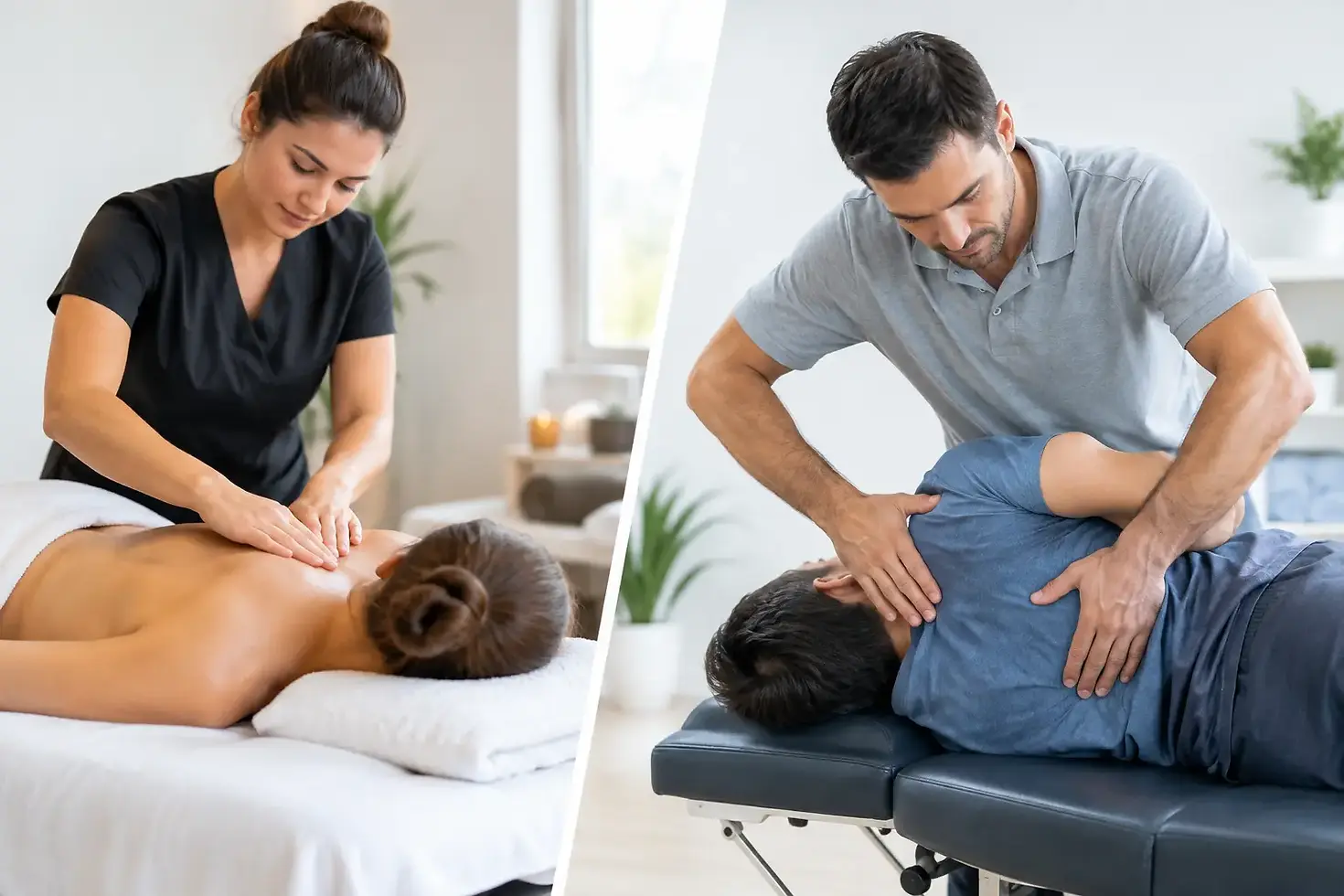
Therapeutic Massage Versus Chiropractic Care
A long flight, a day carrying beach bags, a hard workout, or weeks at a desk can leave the body asking for more than another quiet evening. When choosing therapeutic massage versus chiropractic care, the right answer depends less on which service sounds stronger and more on what your body is experiencing, what relief you want, and how you prefer to be treated.
Both can play a meaningful role in a wellness routine. Yet they work through different approaches. Massage focuses on muscles, connective tissue, circulation, and the nervous system's response to touch. Chiropractic care generally focuses on assessing musculoskeletal function, often with particular attention to the spine and joints, and may include manual adjustments or mobilization. Understanding that distinction can make your next appointment feel intentional rather than uncertain.
Therapeutic Massage Versus Chiropractic Care: The Core Difference
Therapeutic massage is hands-on soft-tissue work tailored to concerns such as tight shoulders, post-travel stiffness, sore legs, persistent muscle tension, or the drained feeling that arrives after a demanding season. A skilled therapist uses pressure, pacing, and targeted techniques to help soften guarded muscles and encourage a calmer physical state.
For many guests, the experience is as valuable as the outcome. A quiet treatment cabin, comfortable temperature, unhurried care, and a therapist who listens before beginning can help the body settle. That is especially welcome when stress has made every muscle feel switched on.
Chiropractic care is typically a more assessment-led clinical service. Chiropractors may evaluate posture, range of motion, movement patterns, joint function, and symptoms before recommending a plan. Treatment can include spinal manipulation or adjustment, joint mobilization, exercise guidance, and lifestyle recommendations. Some people seek it after a specific strain, for recurring back or neck discomfort, or when they want a practitioner to examine a joint-related concern.
Neither approach is automatically better. They are designed for different priorities, and in some cases they can complement one another when coordinated thoughtfully.
When Massage May Be the Better Fit
Massage is often an appealing first choice when the main issue feels muscular, stress-related, or connected to travel and activity. Perhaps your calves are heavy after walking Quinta Avenida, your lower back feels tired after a long transfer, or your shoulders have been tense since before your vacation began. These are common moments when the body benefits from focused, restorative touch.
A relaxation massage is ideal when your central goal is to slow down, sleep better, and leave feeling lighter overall. It uses a soothing pace and pressure that supports deep rest without asking the body to endure an intense session.
For more pronounced tightness, a focused therapeutic session or deep tissue-style treatment may be more appropriate. At Wellness Center Playa del Carmen, the Deep Relax experience is designed for guests who want attentive work for areas holding deeper tension while preserving the comfort and polish of a premium spa setting. Pressure should never be treated as a test of endurance. Effective bodywork is responsive, and your therapist should adjust technique when an area feels too sensitive or when your goals change during the session.
Massage can also be an excellent choice when you do not have a clear injury but know that your body feels restricted. It is not about forcing a dramatic correction. Often, the most helpful treatment is the one that gives your muscles room to release and gives you a quieter relationship with your own body.
When Chiropractic Care May Make More Sense
Chiropractic care may be worth considering when discomfort seems closely connected to a joint, movement limitation, or a recurring pattern that needs clinical assessment. For example, you may notice sharp pain with a particular movement, stiffness that repeatedly returns despite rest, or a sense that your neck or back is not moving normally.
An adjustment can feel helpful to some patients, particularly when it is part of a broader plan that includes movement, strengthening, and education. But it is not a universal solution for every ache. Expectations should be practical: one session may provide temporary relief, while lasting improvement often depends on the nature of the condition, daily habits, activity level, and the care plan itself.
If you choose chiropractic care, look for a licensed practitioner who takes a health history, explains the proposed treatment, welcomes questions, and does not pressure you into a long package before you understand your options. You should know what will be done, why it is being recommended, and what alternatives may be available.
The Case for Combining Care Carefully
For certain people, massage and chiropractic care can be complementary. Massage may help ease protective muscle tension before or between chiropractic visits, while chiropractic guidance may address movement or joint concerns that massage alone cannot fully evaluate. The order is not fixed. It depends on your symptoms, sensitivity, and the recommendations of the professionals involved.
Communication matters. Tell each provider what other treatments you are receiving, what has helped, and what has made symptoms worse. If a chiropractor recommends specific activity restrictions, share those with your massage therapist. If massage leaves an area unusually tender, mention it at your next appointment rather than assuming more pressure is the answer.
This combined approach is best viewed as coordinated support, not a race toward a quick fix. Your body may need rest, gentle movement, hydration, and time alongside professional care.
Pain Relief Is Not the Only Decision Factor
The atmosphere you need matters too. A chiropractic appointment is generally centered on evaluation and musculoskeletal treatment. A massage session can address physical tension while also creating a complete pause from schedules, screens, and travel logistics.
That difference is meaningful for visitors and residents in Playa del Carmen. If your body is tired from a day of exploring but you also want an elevated hour of peace, massage offers a restorative ritual as well as targeted care. If you are worried about a specific injury, persistent numbness, or a problem affecting how you walk or move, a clinical evaluation should come first.
Time and preference can influence the decision as well. Some guests want same-day relief in a serene setting before dinner or after a long day outdoors. Others need a structured treatment plan for an ongoing complaint. There is room for both choices, as long as the service matches the need.
Safety: When to Pause and Seek Medical Evaluation
Massage and chiropractic care are not substitutes for emergency or medical care. Seek prompt medical attention for chest pain, trouble breathing, sudden severe headache, fainting, fever with significant pain, new weakness, loss of balance, or numbness that spreads or affects bladder or bowel control.
It is also wise to speak with a physician before massage or chiropractic treatment if you have a recent fracture, blood clotting concerns, severe osteoporosis, active cancer treatment, uncontrolled high blood pressure, a recent surgery, or a condition that changes sensation. Pregnancy, varicose veins, skin conditions, and acute inflammation do not always rule out massage, but they do require proper modifications and clear communication.
Be direct during your intake. Mention medications, injuries, surgeries, pregnancy, allergies, and the exact location and quality of your discomfort. A professional therapist will adapt the session, avoid areas that should not be worked, or recommend postponing treatment when that is the safest choice.
How to Choose for Your Next Appointment
Start by naming your primary goal in one sentence. If it is, “I want my shoulders and legs to feel less tight, and I need to relax,” therapeutic massage is likely the natural place to begin. If it is, “This pain keeps returning when I turn, bend, or stand, and I need an assessment,” chiropractic care may be more suitable.
Then consider the character of the discomfort. Dull, broad tension and stress-related soreness often respond well to massage. Sudden, sharp, worsening, or neurologic symptoms deserve medical attention before either service. If you are somewhere in between, choose a qualified provider who will listen rather than make assumptions.
The best care feels individualized. You should never have to tolerate pain to prove a treatment is working, and you should never leave without knowing how to support your body afterward. Whether you choose a calming massage, clinical chiropractic care, or a carefully planned combination, give yourself permission to select the experience that meets you where you are - then let recovery become part of your stay, not an interruption to it.


Comentarios